
What is CFD trading: what are the risks involved in CFD trading?
How to Buy Cryptocurrency: Step-by-Step Guide
28 Σεπτεμβρίου 2026How to Create a Crypto Account
28 Σεπτεμβρίου 2026Instead, traders enter into an agreement with a broker to exchange the difference in the asset’s price between the opening and closing of the contract. It’s important to note that even assets that are usually highly liquid, like forex and shares, can experience sudden changes in liquidity under extreme market conditions. However, this volatility is also what allows traders to capture profits – so it’s important to remain perseverant and protect your investments with thorough market analysis and risk management tools.
Market volatility and gapping
If the current close-out percentage level is 50% and you have four trades open that each require £500 worth of position margin, your total position margin requirement will be £2,000. At FISG InterStellar Group, traders can access leveraged CFD markets through MT4 and MT5 while utilizing educational resources and trading tools designed to support informed decision-making. By focusing on risk management and continuous learning, traders can develop a more structured approach to navigating global financial markets. One of the key advantages of CFD trading is the ability to profit from both rising and falling markets. Unlike traditional investing, where profits are usually made only when prices increase, CFDs allow traders to benefit from price movements in either direction.
Because CFDs are such complex instruments, you may be wondering how dividends work when you trade them. The short answer is that because CFDs are derivatives, they do not receive actual cash dividends. However, there are fabricated dividends, or “cash adjustments”, which are made to reflect the economics of the corresponding dividend.
Forex markets are some of the most liquid in the world, with major currency pairs trading 24 hours a day and price changes often measured in fractions of a cent. This liquidity allows brokers to offer higher leverage ratios compared with stock or commodity markets. Leverage is the degree to which your trade’s total exposure compares with your own funds.
Because of this amplification, regulators require prominent risk warnings. Broker disclosures typically show that 70%–89% of retail CFD accounts lose money, underscoring why these products face strict oversight. Leverage is the ratio between a position’s notional value (the market exposure) and the margin that the broker requires to open and maintain that position. In practice, brokers quote margin as a percentage by asset, and trading platforms convert that to an effective leverage. How much you’ll need to deposit depends on the size of your position and the margin factor for your chosen market.
- Therefore, even if you’d planned to close a trade at £5.55, you might not get a choice.
- Understanding liquidity can help traders appreciate why execution prices may sometimes differ from expectations.
- It is important to note that stop-out is a risk control, not a guarantee against losses.
- Position sizing, diversification across uncorrelated assets and disciplined exposure limits remain fundamental to managing leveraged risk responsibly.
- Please appreciate that there may be other options available to you than the products, providers or services covered by our service.
- Understanding the psychological impact of leverage on trading behavior adds another layer of complexity.
By understanding leverage and how to calculate it, traders can ensure that they are not taking on more risk than they are comfortable with and can manage their positions accordingly. Less liquid markets may experience wider spreads or larger price movements, particularly during periods of reduced trading activity or significant market events. This example illustrates why even relatively small market movements can have a significant impact when trading leveraged products. Because CFDs are commonly traded using leverage, relatively small market movements can have a much greater impact on a trader’s account than when purchasing the underlying asset outright. CFD risk refers to the possibility of losing money when trading Contracts for Difference. Like any financial product, CFDs are influenced by market movements that cannot be predicted with certainty.
Instead of trading at the buy and sell prices offered by us, you can see all the available bid and offer prices at any time and trade at market prices you choose. CFD trading can be emotionally challenging, especially for inexperienced traders who are not accustomed to the rapid price fluctuations of the markets. The potential for large gains can create excitement, while the possibility of significant losses can lead to anxiety and stress. Liquidity risk refers to the risk that a trader may not be able to execute a trade at the desired price due to insufficient market liquidity. In CFD trading, liquidity refers to the ability to buy or sell a position without causing significant price movements. Investors should set asidetime to become knowledgeable about the markets, trading methods, and riskcontrol procedures.

Understand what you can afford to lose.
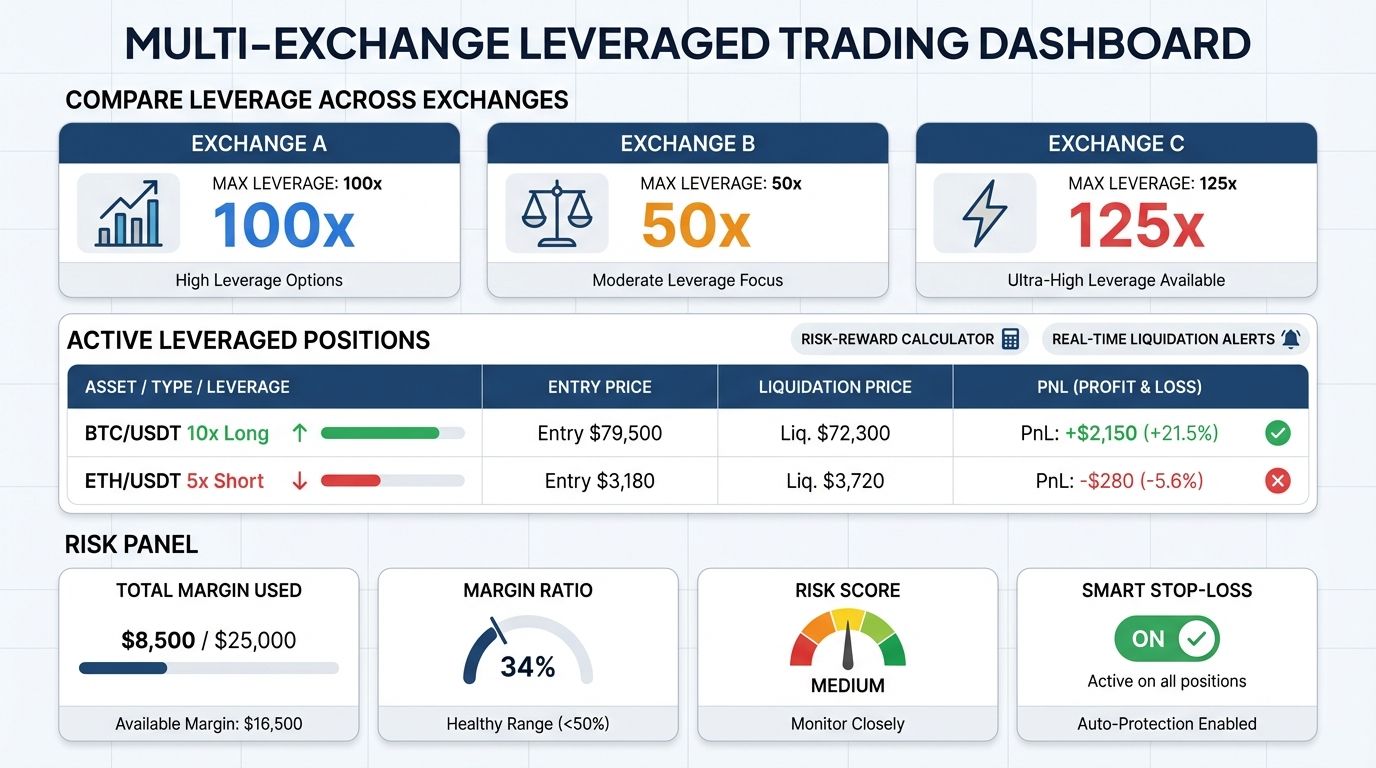
Traders who use high leverage are particularly vulnerable to margin calls because even small price movements can trigger significant losses. To avoid margin calls, traders should ensure that they maintain sufficient margin in their accounts and use appropriate risk management strategies. Before delving into the risks, it is essential to understand what CFD trading is.
Volatility and Market Movements
If other clients fail to pay what they owe on massive losses, the pooled account can slip into a deficit, delaying your own payouts. When you trade CFDs, your financial safety is tied directly to the platform provider itself. If a broker requires a 5% margin, you are effectively borrowing the remaining 95% of the capital to run the trade. Before looking at the dangers, it helps to understand how these instruments actually function.
in Risk Management
Understanding how these mechanisms work is essential when trading leveraged CFDs, particularly during periods of elevated volatility. CFD trading involves speculating on price movements, and https://www.trustpilot.com/review/fxverge.com these price movements are subject to the inherent volatility of the markets. Market volatility refers to the degree of variation in the price of an asset over time.
FISG Trading Platform Features: What Modern Traders Expect from a Multi-Asset Environment
For index, commodity or share CFDs, financing is more commonly a debit on long positions, although short positions may receive or pay adjustments depending on the pricing model. When a position is opened, part of equity is set aside as used (required) margin, calculated as notional value multiplied by the broker’s margin percentage. A $50,000 CFD position with a 2% margin requirement uses $1,000 in margin. If additional positions are opened, their required margins accumulate. Used margin is not a fee, it is collateral supporting open exposure. For most CFD trades, the cost of opening your position is covered in the spread.
How do I choose a reliable broker for CFD trading?
If the broker withdraws these funds to cover margins for platform operations, your money loses standard regulatory protections. If a market gaps over the weekend or during a major political election, standard stop-loss orders might fail to trigger at your desired level, leaving you exposed to unmanageable losses. The material (whether or not it states any opinions) is for general information purposes only, and does not take into account your personal circumstances or objectives. Nothing in this material is (or should be considered to be) financial, investment or other advice on which reliance should be placed. The material has not been prepared in accordance with legal requirements designed to promote the independence of investment research.
Welcome to EBC Financial Group (UK) Ltd
This means you can potentially earn higher returns on your investment. Diversification is a common strategy among traders to reduce risk because if one asset or trade doesn’t perform well, another might. For example, gold prices will often increase when currency prices fall and vice versa. The more diverse your portfolio is, the more likely you have something to offset a losing asset.
The Future of Trading Is 24/7 – Why Continuous Market Access Is Becoming the New Standard
Instead, think aboutdiversifying across several industries, geographic locations, and assetclasses. Due to theover-the-counter (OTC) nature of CFD trading, traders are subject to the creditrisk of their CFD supplier. Selecting a trustworthy broker with a soundfinancial position and regulatory compliance is crucial.
Common Mistakes in CFD Risk Management
You are able to limit the risk and impact of market volatility by applying boundary order or guaranteed stop-loss order. Finally, diversification, regular review of market conditions, and choosing a regulated broker with negative balance protection all help mitigate the risks of margin calls and amplified losses. When a leveraged trade moves against you, the broker may issue a margin call, requesting additional funds to maintain the required margin level.